Unknown information about India – Asia
Unknown information about India – Asia
|
| Unknown information about India – Asia |
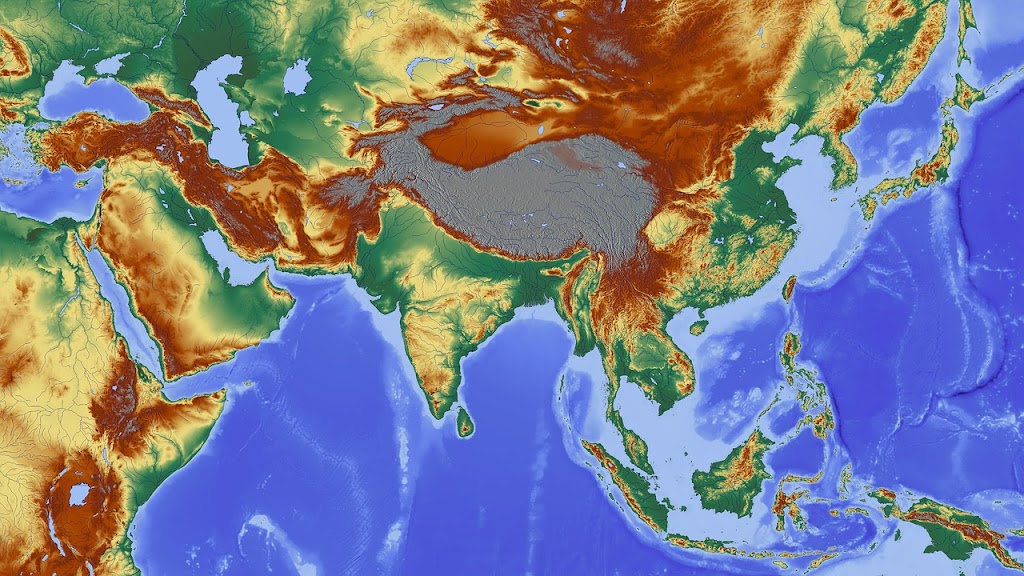
What do you think happens when you ram the unstoppable Indian plate into the massive Eurosian plate? You get the tallest mountain in the world – Mount Everest, you get global climate change and you get huge earthquakes like the magnitude 7.8 in Nepal in 2015. And if you want to find out why the Indian subcontinent is a big like a “Viking Funeral Ship” and how its collision with Eurasia changed our Earth forever. The Himalayas are huge, and the Himalayas are beautiful. And it was PLATE TECTONICS that caused the Indian plate to crash into the Eurasian plate 50 million years ago. This violent collision created the highest mountains in the world, spreading over 1,500 miles. The Himalayas are so beautiful that many of its peaks are considered holy in both Buddhism and Hinduism. When we say “plate tectonics,” we mean the geological theory that the earth’s surface is made of many insanely massive plates, which hold continents on top.
All these continents move – and you might think, “but continents are HUGE, how can they move?” Well, deep inside the earth, its hot. Like real hot. And when that energy builds up, it creates currents of molten earth which make its outer shell – these continents – move. This tectonic process began probably about 3.5 billion years ago after the Earth cooled down. Our resident Earth Sciences professor Dr. Nigel Hughes spent his life studying the Indian subcontinent and broke down the tectonic process just for you guys. You can find our interview with him in a link at the end of this video. Now let’s rewind 550 million years, when the supercontinent Gondwanaland was formed. At the time, India was part of this supercontinent – as were Africa, Australia, Antarctica and South America. 270m years later Gondwanaland collided with the Euramerican continent to form an even bigger supercontinent called Pangea.
 |
| Unknown information about India – Asia |
Gondwanaland later disintegrated, which meant India broke off and began to move northwards. As India moved, it passed over ‘hot spots’ in the Earth’s interior which meant India’s picked up a lot of speed. Imagine continental plates like icebergs, most of it isn’t visible. Now imagine a big part of India’s “iceberg” getting separated from the bottom. Well, that happened, which meant India got lighter and could pick up even more SPEED. And pick up speed it did – crossing 9 THOUSAND kilometers in 70 million years – all the way from the South Pole to its position in the north today. To put this into perspective, plates usually move about 5 centimeters a year. India moved almost TWENTY centimeters a year. And it’s this unbelievable geological speed that explains the size of the Himalayas. The faster and harder the collision, the greater the impact.
What did we mean? In the days of the Vikings, if a high ranking warrior died, their bodies were sent across the sea on a funeral ship with their most precious belongings. And you see India — with its treasure trove of ancient fossils from Gondwanaland — traveled like a VIKING FUNERAL SHIP across the ocean. On the Indian subcontinent early geologists found extinct fossils like Glossopterris, an extinct fern plant that looked like a tongue, or the weird looking Lystrosaurus, an extinct herbivorous animal or the hard-shelled trilobites, an extinct marine arthropod species. These fossils were also found in Africa, Antarctica AND South America, which indicated a historical connection between these places. These fossils were used as evidence for the existence of Gondwanaland, and also to prove the theory of plate tectonics. But India didn’t ONLY transport dead stuff — it also carried living stuff!
 |
| Unknown information about India – Asia |
As India floated for millions of years, countless species roamed on its surface and evolved in many different climates. This created whales. Wait…WHAT? Well, one of the coolest evolutions happened while India was getting closer to Asia – tiny deer-like animals that lived on its lands probably evolved to become the ancestors of modern whales. And when the two plates finally collided, the plants and animals living in India could spread and interacted with species living in Asia. According to Dr. Hughes, this kind of mingling and the changing physical environment offered a perfect boiling pot for biological innovation – evolution. India’s collision didn’t just affect the ground and animals, though. It also changed the local and global climate. Poetry about the great Asian Monsoon cycles date back thousands of years, with some of the earliest being Kalidasa’s Sanskrit poem “The Cloud Messenger”.
This unique cycle of rain was kickstarted by the Himalayas and Tibettan plateau. You see, this whole area is so high up that it sucks in humid air from the Indian Ocean as one big high pressure system. When clouds build up there and get blocked by the mountains, seasonal rains fall heavily across the whole subcontinent. The Himalayan water system supports one-fifth of the world’s population, and mighty rivers like the Indus, Ganges, Yangtze or Brahmaputra were created in the Himalayas. All this water makes the Himalayas erode…and this eroded material has got to go somewhere, right? Well, over the last 26 million years, the deposited sediment has gotten 20 kilometers thick. And that built the whole Bengal Delta. But there’s one more very big thing the Indian plate did, just as it so warm there were no ice caps in the North or South poles. But after the collision, silicates in the Himalayan mountains started to absorb massive amounts of CO2 really fast from the atmosphere.
 |
| Unknown information about India – Asia |
That all meant one thing – GLOBAL COOLING. And as the Himalayas rose further, the temperature of the whole Earth fell — and so began the last Ice Age. Today, India’s story is still unfolding. The Indian plate is STILL moving and still slowly PLOWING into the Eurasian plate – which means the Himalayas are still growing and this constant friction is also causing the crazy big earthquakes in Nepal and surrounding countries. We’re still figuring out how the collision changed our planet forever, but what we do know is that this event was — and continues to be — one of the key events in our planet’s 4.5 billion year history.