Amazing Materials of the Future
Amazing Materials of the Future
|
| Amazing Materials of the Future |
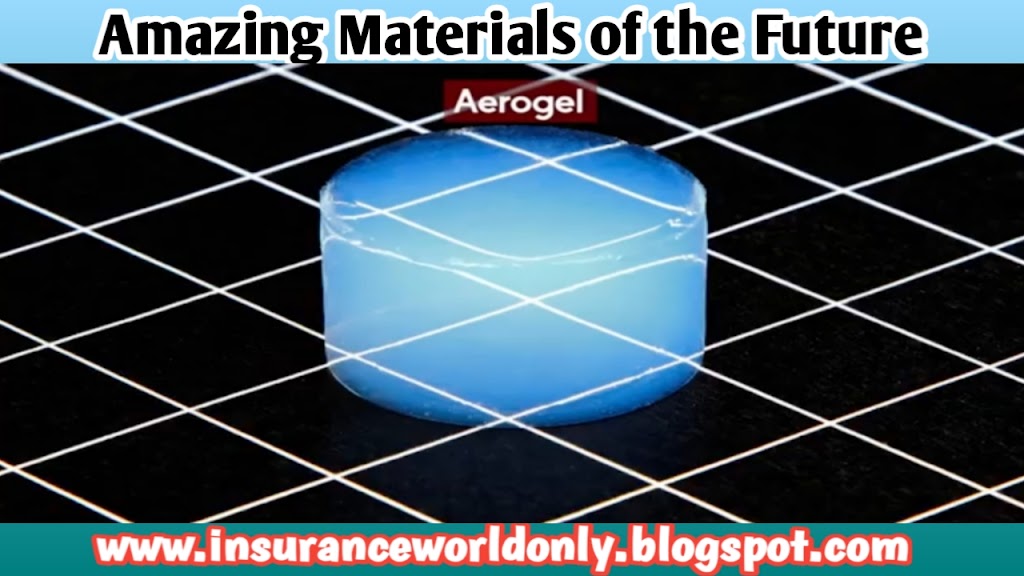
Aerogel
Aerogel holds 15 entries in the Guinness Book of Records for material properties, more than any other material. It is the world’s least dense solid. Sometimes called “frozen smoke”, aerogel is made by the supercritical drying of liquid gels of alumina, chromia, tin oxide, or carbon. It’s 99.8% empty space, which makes it look semi-transparent. Aerogel is also a fantastic insulator. If you had a shield of aerogel, you could easily defend yourself from a flamethrower. It stops cold and it stops heat. You could even build a warm dome on the Moon. Aerogels have unbelievable surface area in their internal fractal structures. Cubes of aerogel with just an inch on one side may have an internal surface area equivalent to a football field. Aerogel is currently being used as an insulation product, thickening product in cosmetics, laser targets, blankets, in space suits, military armor, and in particle physics, just to name a few.
Fun fact
NASA used an aerogel to trap space dust particles aboard the Stardust spacecraft. The particles vaporize on impact with solids and pass through gases, but can be trapped in aerogels.
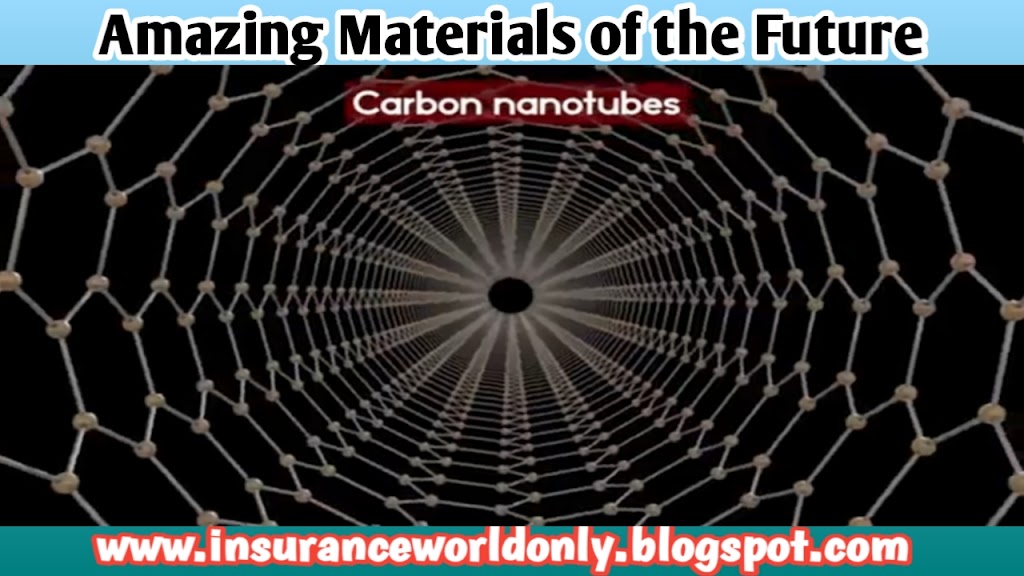
Carbon Nanotubes
 |
| Amazing Materials of the Future |
Carbon nanotubes are long chains of carbon held together by the strongest bond in all chemistry, the sacred sp2 bond, even stronger than the sp3 bonds that hold diamonds together! Carbon nanotubes have numerous remarkable physical properties, including ballistic electron transport, which makes them ideal for electronics, and so much tensile strength that they are the only substance that could be used to build a space elevator. Yup! Just like the one that Google is trying to build!! Nanotubes could be used to build a pipe that transports materials and maybe even humans to the International Space Station or the moon! The specific strength of carbon nanotubes is 48,000 kilonewtons per kg. The previous record holder for structural strength was high-carbon steel, with a measly 154 kilonewtons per kg. That’s 300 times stronger than steel. You could build towers hundreds of kilometers high with it. Or the world’s strongest, and tiniest straw. Your pick.
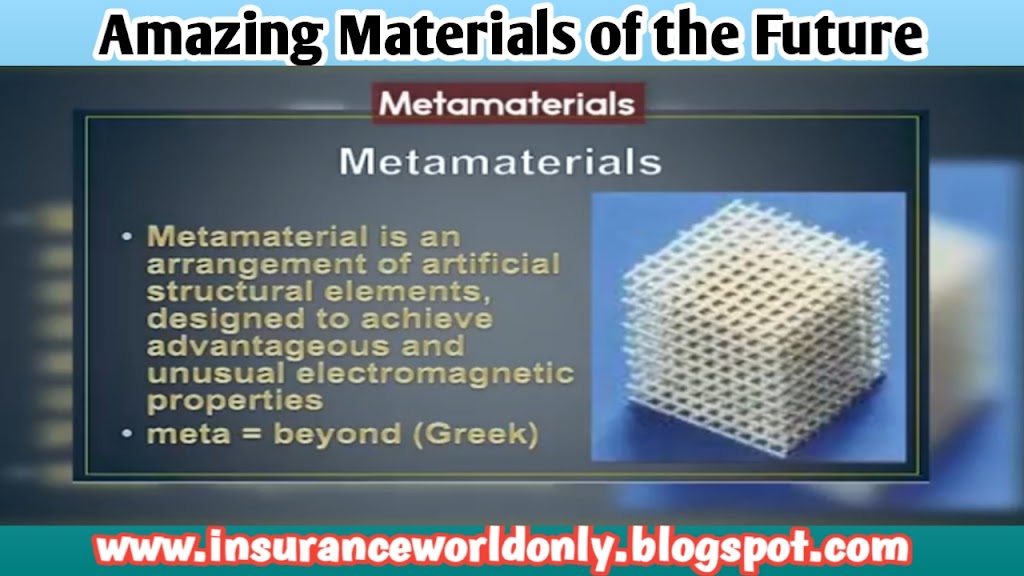
Metamaterials
 |
| Amazing Materials of the Future |
“Metamaterial” refers to any material that gains its properties from structure rather than composition. Metamaterials have been used to create microwave invisibility cloaks, 2D invisibility cloaks, and materials with other unusual optical properties. Mother-of-pearl gets its rainbow color from metamaterials of biological origin. Some metamaterials have a negative refractive index, an optical property that may be used to create “Superlenses” which resolve features smaller than the wavelength of light used to image them! This technology is called subwavelength imaging. Metamaterials would be used in phased array optics, a technology that could render perfect holograms on a 2D display. These holograms would be so perfect that you could be standing 6 inches from the screen and not even notice it’s a hologram.
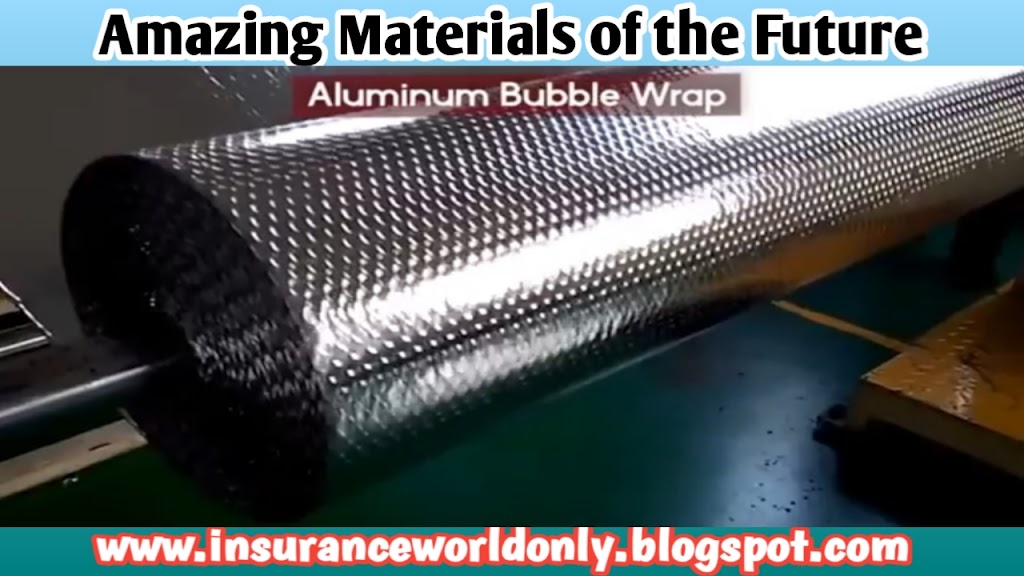
Aluminum Bubble Wrap
 |
| Amazing Materials of the Future |
Imagine your favorite packing-based stress reliever, except made of metal. OK, metallic bubble wrap might not be quite as easy to pop, but it could be a heck of a lot more useful. A team of engineers from North Carolina State University have developed a new form of aluminum bubble wrap, which they claim could revolutionize packaging and protective equipment. The scientists take a thin sheet of aluminum, then use a studded roller to form small indents in the sheet. Unlike its polyethylene counterpart, these voids are then filled with a foamed material like calcium carbonate, before being sealed with another flat sheet of metal. The result is a series of bubbles that absorb masses of energy, weighs 30 percent less than regular sheet metal, and yet are nearly 50 times stronger. It’s easy to make, not too expensive, and could soon be used in everything from shipping containers for fragile goods to bike helmets. Just don’t be tempted to try and pop it.
Titanium Foam
 |
| Amazing Materials of the Future |
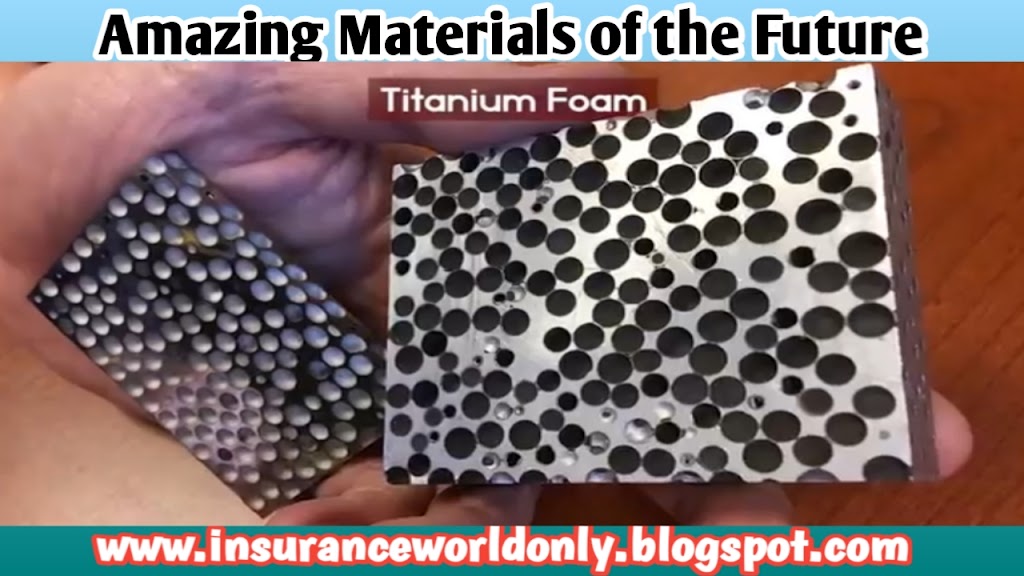
This is the foam you want to get your hands on, and it’s made out of titanium. By saturating a humble polyurethane foam with a solution of titanium powder and binding agents, it’s possible to force the metal to cling to the shape of the simple foam and then vaporise the underlying structure away. The result is a titanium lattice in the shape of the original foam, which can be heat-treated to tweak its material properties. The exact properties depend on how porous the foam is, but the results are interesting. The structure is both strong and, most importantly, incredibly light. In fact, the material is perfect for replacing human bone! It has incredibly similar mechanical properties and, because it’s porous, new bone can grow in and around its structure, truly integrating the implant within the skeleton. Anything that gets us that much closer to a real-life Wolverine is fine with me.
Molecular Superglue
 |
| Amazing Materials of the Future |
If you’ve ever stuck your fingers together with superglue, you know pain. Now imagine sticking them together with glue that bonds materials at the molecular level. That’s real pain. In fact, a team of researchers from the University of Oxford has created a molecular glue inspired by Streptococcus pyogenes—the flesh-eating bacteria. They considered a single protein from the bacterium, the one it uses to bind to human cells, and from there developed a molecular glue which forms covalent bonds when it comes into contact with a partner protein. The bonds it forms are so strong that, when researchers tested a sample, the equipment used to measure the strength broke before the glue did. All that remains is to develop ways of incorporating the proteins into other molecular structures in order to create insanely strong, selective glues. Sounds like something you would find in a Marvel comic book!
Artificial Spider Silk
 |
| Amazing Materials of the Future |
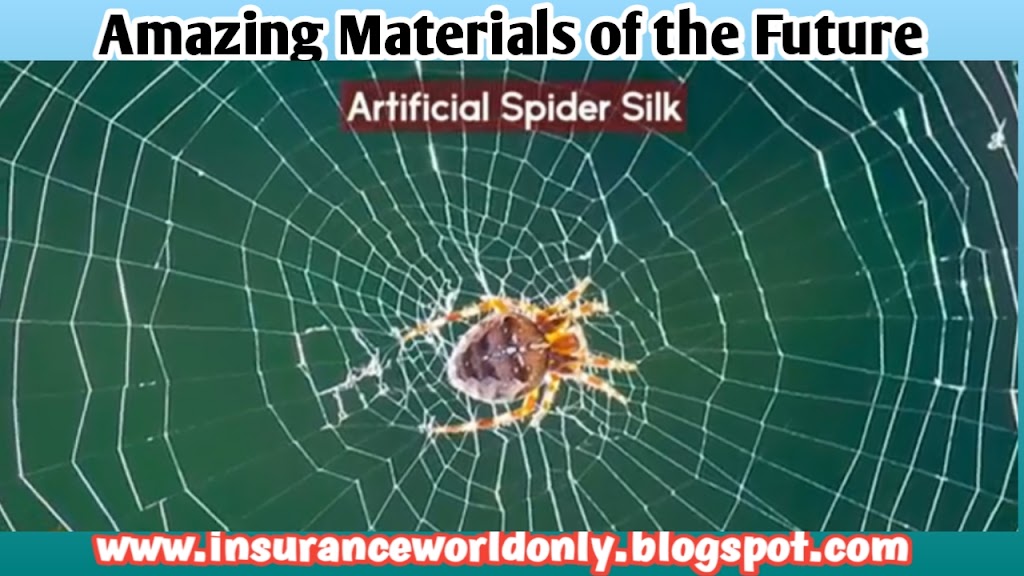
Silk is Nature’s very own homespun wonder material but it’s tough to make in bulk. This is why a Japanese startup called Spiber has been working out how to produce it synthetically. It’s managed to decode the gene responsible for the production of fibroin in spiders, which is the key protein used to create the super-strong strands of silk. Having cracked that key component, the company has gone on to create bioengineered bacteria (from E.Coli) that can make silk extremely quickly. The company can reportedly create a new type of silk from scratch to finished product in just 10 days. The bacteria feed on sugar, salt and other micronutrients, and quickly produce the silk protein. This protein is turned into a fine powder, spun and processed to create fibres, composites, solid block… pretty much anything. A single gram of fibroin produces 5.6 miles of silk. They are working on mass producing the stuff to revolutionize the textile industry and are churning out silk by the metric ton! That’s a lot of silk, and all of that without a spider in sight. You can already start buying jackets made from this silk! They have a heavy price tag though, about $750 apiece.
BacillaFilla
 |
| Amazing Materials of the Future |
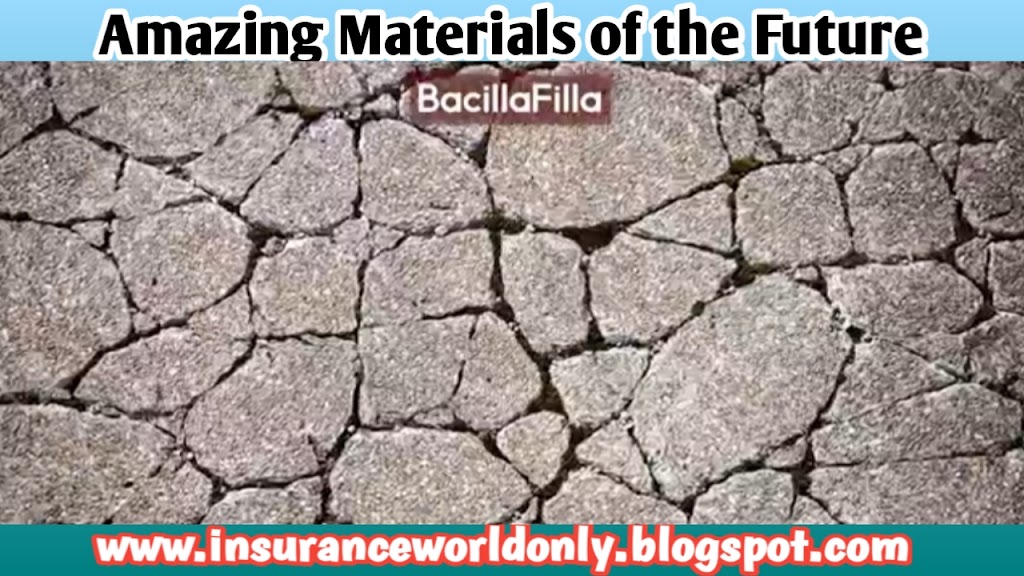
Concrete ages over time, taking on the sickly polluted-grey look we all know and developing fractures in the process. Repairs are time-consuming and expensive — if the foundation of a building cracks, there’s often no easy way of fixing it. Many buildings in earthquake zones have been simply torn down for this reason. But a group of students at Newcastle University have produced a genetically modified microbe, that has been “programmed to swim down fine cracks in concrete and produce a mixture of calcium carbonate and bacterial glue … to ‘knit’ the building back together”. The “programming” of the BacillaFilla spores mean they only start germinating on contact with concrete, can sense when they reach the bottom of cracks, harden to the same strength as the surrounding concrete, and have a built-in self destruct gene to stop them going rogue and producing massive concrete tumors. There are also environmental implications. 5% of all man-made carbon dioxide is from the production of concrete. It is hoped the spores will be able to prolong the life of structures that would be very costly to rebuild.
Amorphous Metal
 |
| Amazing Materials of the Future |
Amorphous metals, also called metallic glasses, consist of metal with a disordered atomic structure. They can be twice as strong as steel. Because of their disordered structure, they can disperse impact energy more effectively than a metal crystal, which has many weak points. Amorphous metals are made by quickly cooling molten metal before it has a chance to align itself in a crystal pattern. Amorphous metals may be the military’s next generation of armor, before they adopt diamondoid armor mid-century. On the green side of things, amorphous metals have electronic properties that can improve the efficiency of power grids by as much as 40%, saving us thousands of tons of fossil fuel emissions.
Glowee
 |
| Amazing Materials of the Future |
Bacteria may light up the future. Glowee, a start-up company based in Paris, is developing bioluminescent lights to illuminate shop fronts and street signs. After a successful demo in December, Glowee has launched its first product – a bacteria-powered light that glows for three days. The company is now working on lights that will glow for a month or more. The lights are made by filling small transparent cases with a gel that contains bioluminescent bacteria. Glowee uses a bacterium called Aliivibrio fischeri, which gives marine animals such as the Hawaiian bobtail squid the ability to glow with a blue-green light. The gel provides nutrients that keep the bacteria alive. At first, the lights only worked for a few seconds. But by tweaking the consistency of the gel so it delivers nutrients more efficiently, the team has been able to extend their lifespan to three days. Bioluminescent lights are not new. But Glowee is one of the first companies to develop a commercial product, which is initially being marketed to shops. In France, retailers are not allowed to light their shop windows between 1 am and 7 am to limit light pollution and energy consumption. The softly glowing bacterial lights, which are about as bright as night lights, provide a way to get around the ban.
Graphene
 |
| Amazing Materials of the Future |
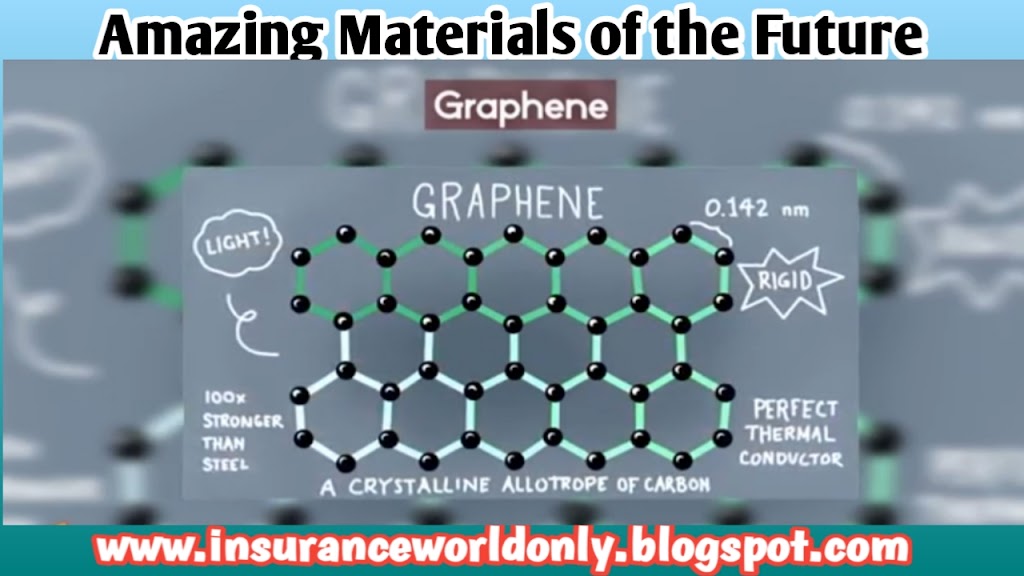
Graphene is the strongest material known to science at the present time. It is 200 times stronger than steel. It is one of the strongest, thinnest, and lightest material in the world. Graphene is single layer of pure carbons arranged in a hexagonal lattice pattern. It is so thin it is considered to be a 2 dimensional object. This newly discovered material might be one of the most important known to man. It has amazing thermal and electrical conductivity properties. It is also very malleable but at the same time it is very strong. This means it can be used for many different things such as high capacity batteries, flat screens televisions, and for very small computer chips. It’s made by taking special adhesive tape to collect residue from graphite, the same material used in everyday pencils. This easy and simple yet groundbreaking experiment was conducted by Andre Geim and Konstantin Novoselov. They later won the Nobel Prize for Physics because of these experiments. Graphene is definitely going to have an impact on the world.
D30
 |
| Amazing Materials of the Future |
Impact protection has always been a difficult problem — how do you make something that offers real protection without becoming too heavy or inflexible? Plastic knee-pads, for example, restrict movement and can still transmit impacts to bone. D30 offers an ingenious fix to this problem. It’s a material made of ‘intelligent molecules’ that move freely under gentle pressure, but lock up when struck hard. Jackets are already on the market containing D30 pads that offer flexibility, as well as protection from the tarmac, baseball bats or fists you might accidentally walk into. The pads are low-profile, making the jackets suitable for stuntmen or even police. The material actually works on a familiar principle, similar to the mixture of cornstarch and water you remember from elementary-school science experiments.
Graphene Aerogel
 |
| Amazing Materials of the Future |
If the phrase graphene aerogel sounds to you like someone combined the two buzziest of materials buzzwords then… you would be right. In fact, this graphene aerogel snatched the title of the world’s lightest material just a few of months ago—with a density lower than that of helium and just twice that of hydrogen at 0.16 milligrams per centimeter cubed. This stuff practically floats on air. The material was actually created using a new technique which involves freeze-drying solutions of carbon nanotubes and graphene to create a kind of carbon sponge. The resulting material is both strong and elastic, as well as incredibly light. It can even absorb up to 900 times its own weight in oil. When—or if—it becomes affordable, it could potentially be used to mop up massive oil spills with ease, or even as an incredibly efficient version of humble old insulation.